To knit, you’ll need needles, your favourite wool, plenty of love, a pinch of patience, and sometimes a steam iron or a steamer. With these, you can do something wonderful that will make it easier to finish your knitted creation: steam blocking.
What does it mean to steam block your knits?
Steam blocking in essence is a gentle way of blocking a knitted piece. The heat and moisture from the steam help the fibres to relax, the stitches to settle, and the fabric to become more even, without you having to wash or fully soak the piece. However, steaming is not a shortcut and does not replace washing and blocking your finished knits — a ritual you should always celebrate once they are complete — but it can help you achieve the perfect result.
When and why should I steam block my knits?
Steam blocking is a good alternative to traditional wet blocking when it comes to individual pieces that are to be sewn together later.
Knitted pieces in stockinette stitch, in particular, tend to curl at the edges. Sewing the pieces together is, of course, much easier if the edges lie flat. That is why knitting patterns often recommend blocking the individual pieces before sewing them together.
With traditional wet blocking, however, there is a risk that the individual pieces might somewhat change their form or, despite taking every precaution, end up with slightly different measurements, meaning they won’t match 100% when sewn together later.
You can avoid this by not washing and blocking the pieces (just yet), but instead steaming them gently first so that the edges lie flat, and you can then sew them together easily.
Twilight Trail, for example, is a pattern where you knit the pieces separately, and steaming makes it easier to join them at the shoulder and side seams.
How do I go about it?
Steam blocking isn’t difficult or time-consuming at all. However, there are a few things you should bear in mind to ensure your woolly creation doesn’t lose any of its beauty.
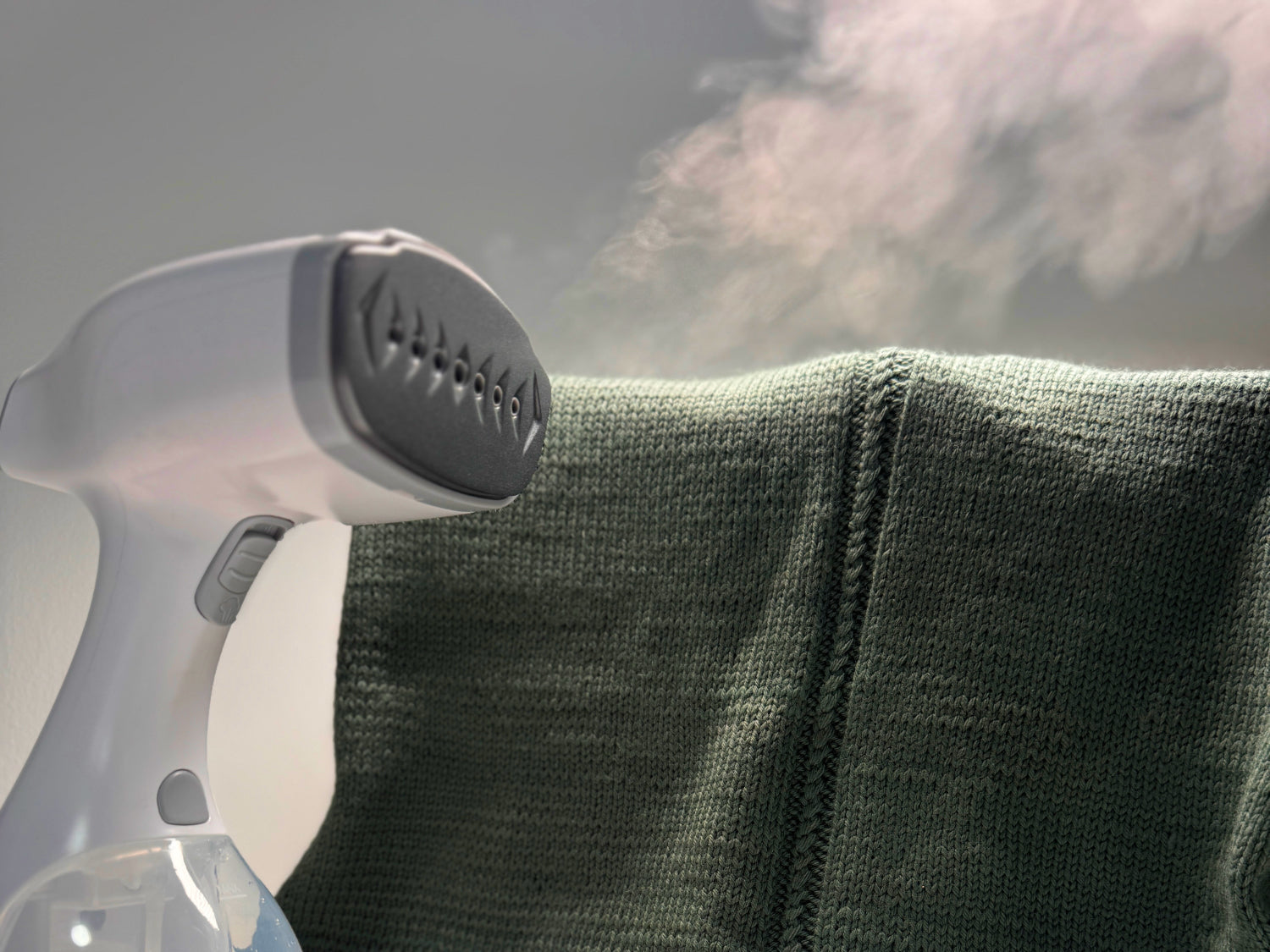
You can steam block using a standard steam iron or a handheld steamer. Both work on the principle of steam penetrating the fabric, relaxing the fibres and smoothing out the knit. With a few simple steps, you’ll achieve your goal and will soon be able to sew your sweater, cardigan and other garments together.
Lay flat and pin
Lay the pieces flat on a surface, such as your ironing board or a blocking mat. Pin the edges in place, but take care not to stretch the knit. Particularly with stockinette stitch, where the edges curl upwards significantly, you’ll find it easier if the wrong side of the knitted piece faces you, as the edges curl in that direction too.
Not too hot
Set the iron to just the temperature needed for the steam. Avoid high temperatures – just as you would when washing your treasures.
No pressure
Hold your iron or steamer without touching the fabric, so that it hovers above the surface. Do not rest the weight of the iron on your knitted piece or press down on it. Textured and cable patterns in particular do not like this at all, as it takes away their volume. Yet this is precisely where we want them to look beautifully three-dimensional and not lie flat.
Even steam
Select a setting that releases steam evenly and move your iron over your knit without lingering too long in one spot.
Allow to cool and dry
After steam blocking, leave your knitted piece to rest for a short while so that it can cool down, and the moisture can evaporate from the fibres.
A little extra for those in a hurry
Steaming isn’t just your ally before sewing the pieces together; it has another advantage: merino wool doesn’t need to be washed after every wear anyway. Airing it out is usually sufficient. If you’re short on time, you can also use the warm steam to your advantage. It gently removes odour-causing bacteria and the like, quickly refreshing your knitted treasures.
Steam blocking as described also ensures that your favourite knitwear quickly lies flat again should it have creased in the wardrobe or in your suitcase.